Sandless Hardwood Floor Refinishing

Sandless Hardwood Floor Refinishing in Bottineau County, North Dakota (ND)

All over Bottineau County, dull hardwood turns glossy again between breakfast and dinner, without a grain of sanding dust.

Call (888) 217-5291

The call costs nothing and commits you to nothing. Any trip fee for the look is named when the date is set, and the per square foot price follows in writing.

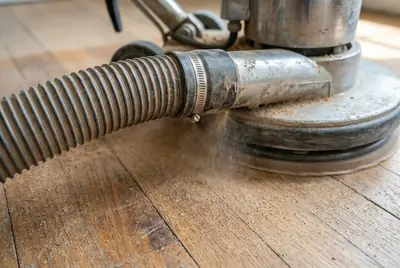
Dust stays in the hosethe pad and the vacuum are one machine
Furniture keeps its addresspieces shuffle a few feet, none leave the house
Walkable by bedtimestocking feet that evening, shoes the next day
Priced by the square footin writing before a single cord is plugged in

Refreshing your worn wooden floor surfaces in Bottineau County

Getting your scratched timber planks back to their original luster is possible without the mess of heavy sanding machines. This process uses a specialized mechanical abrasion technique to remove only the very top layer of the existing finish. You can enjoy restored shine and protection for your walking surfaces while keeping your home free from thick clouds of fine sawdust.

The technical process for revitalizing wood floors

Instead of grinding down the actual wood fibers, this method focuses entirely on the protective topcoat. Skilled technicians use a floor buffer equipped with a specific abrasive pad to lightly scuff the current seal. Because this approach avoids aggressive sanding, it preserves the integrity and thickness of your original flooring material for many future years.

Once the surface reaches the proper texture, the crew applies a fresh layer of high-quality polyurethane resin or a similar durable topcoat. This final coating bonds perfectly to the scuffed layer underneath to create a brand new shield against daily wear. You benefit from a smooth finish that resists spills and scratches without needing to vacate your living space during the work.

Comparing traditional sanding with this gentle alternative

Traditional methods often require removing a significant amount of wood to level out deep gouges. That traditional approach creates massive amounts of dust that permeate your entire house for weeks. Choosing this lighter method keeps the air clean and prevents the need for intense deep cleaning of your belongings after the job ends.

However, keep in mind that this process does not fix deep dents or structural damage in the wood underneath. It works best for surfaces that look dull or have light surface scratches that bother your eyes. This reality makes it a perfect solution for floors that just need a quick cosmetic lift to look new again.

Why this method works for local homeowners

Most residents around here appreciate how quickly they can return to using their rooms after the coating dries. Since there is no heavy machinery grinding away at the subfloor, the noise level remains much lower than standard renovation projects. You gain the advantage of a beautiful and renewed look without the typical disruption of a major construction phase.

Feature Benefit for you
No deep sanding Keeps your home free of harmful dust particles
Fast drying coatings Lets you use your rooms again in hours
Surface abrasion Preserves the wood thickness for longevity

Planning your floor restoration project

Look for a local pro who offers clear communication about what this method can and cannot achieve for your floors. Always verify that the service provider carries proper liability insurance to protect your property during the process. Having a professional who understands the specific needs of wood in this climate helps ensure the final result lasts for a long time.

Before starting, clear all furniture from the rooms to allow the team full access to the surface area. This preparation step helps the workers finish the project efficiently and gives you a better final result. You should request a free quote today to discuss your specific needs and see how this method fits your budget for home maintenance.

How sandless actually works

Three moves, in this order, in one visit. The whole trick is that the abrasion is gentle and the extraction is immediate.

An abrasion kept on a short leash

1. An abrasion kept on a short leash

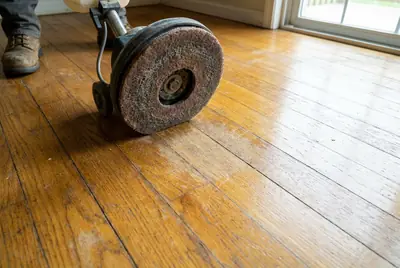
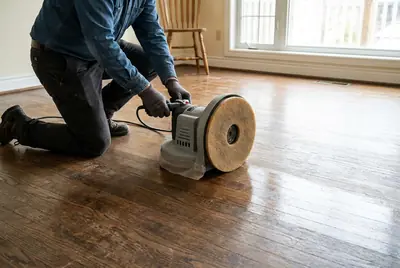
A slow orbital pad, dressed with fine screens, works only the worn finish layer. It never chews down to raw wood the way a drum sander must, which is exactly why the boards keep their thickness and the house keeps its calm.

Extraction at the point of contact

2. Extraction at the point of contact

A sealed shroud hugs the pad and a vacuum pulls every particle away the instant it exists. Nothing drifts to the bookshelves, nothing settles in the vents, and the wipe-down afterwards takes minutes, not a weekend.

A fresh wear layer to lock it in

3. A fresh wear layer to lock it in

Once the surface is keyed and spotless, a new coat of waterborne finish goes down and bonds to the old one. The shine you get is not polish sitting on top of tired wood, it is a real finish layer with years in it.

The honest limits of skipping the sander

Sandless refinishing renews the finish, not the wood underneath it. That sentence decides everything, so we put it up front. When your floor needs the full sanding treatment, we say so at the look and you keep your money for the right job.

What the floor showsCan sandless fix it?What we tell you at the look
Scratches and scuffs that live in the finishYesThe pad erases them with the old wear layer and the new coat leaves an even sheen. This is the job sandless was born for.
A gouge that goes through to bare woodNoA recoat will seal it, not erase it. Cutting it out takes a full sanding down to raw wood; you hear that from us on sight, not a shine sold over a scar.
Gray or cupped boards from old water damageNoWood that has gone gray has lost its surface fibers. No finish revives them. Those boards need a full resand, sometimes replacement, and honesty about it costs you nothing.
A waxed or oiled floorWe test firstWax and some oils refuse to let a new finish bond. A small adhesion patch in a closet corner settles the question before anyone commits to a whole room.

Roughly four floors in five that we look at qualify. The fifth gets a straight answer and a handshake, because a crew that promises miracles over dead wood is the reason this trade has a reputation to repair.

The work, framed

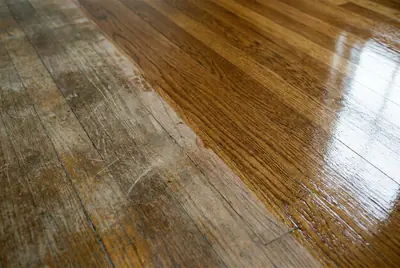
The same hardwood boards before and after a sandless refresh
Same boards, one day apart The left half is the floor we met in the morning. The right half is what the family walked on that evening.
The screen between passes
The screen between passes Fine mesh screens, swapped often, so the cut stays even from the first room to the last.
The pad that replaces the sander
The pad that replaces the sander Wide, slow and forgiving. It cannot dig a trench in your floor even if you asked it to.
The hose that eats the evidence
The hose that eats the evidence Sealed extraction from the first pass to the last. White glove on the mantel afterwards.
The coat going down
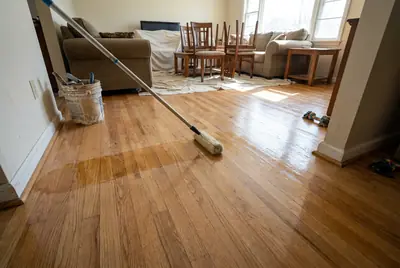
The coat going down Waterborne finish, cut in at the edges and rolled tight. Low odor, honest depth.
Handover before dinner
Handover before dinner The crew walks you across your own floor in socks, hands over the care sheet and closes the door on a house that smells like nothing happened.

One day, start to finish

  1. The call, then the look

    One call to (888) 217-5291 books it. Then twenty minutes at your place. We read the finish, run a moisture meter over the suspect spots, rub an adhesion patch where the sun cannot see it, and measure the rooms. You get one per square foot price in writing before we leave the driveway.

  2. The one-day pass

    The crew arrives in the morning and works the house in halves: furniture slides to one side, pad and vacuum make their passes, the coat goes down, then the halves trade places. Most homes are done between breakfast and late afternoon.

  3. The quiet evening

    The finish needs a still house more than it needs anything from you. Socks are fine that evening, furniture glides back on felt the next day, and area rugs take a week off while the coat hardens all the way through.

What a square foot of shine costs

The jobUsual bracketWhat sits inside it
Shine refresh, one coat$1.25 - $2.00 per sq ftThe classic: screen the old finish, capture the dust, lay one fresh coat.
Two coats on a tired floor$1.75 - $2.75 per sq ftWhen traffic lanes have worn thin, a second coat rebuilds the wear layer.
Deep clean and recoat$2.25 - $3.50 per sq ftEmbedded grime scrubbed out first, then the screen and the new finish.
Small job minimum$350 - $500 flatOne room or a hallway still books a full crew and a full setup.

Species, wear and how much furniture rides along move the figure inside those brackets. The number you sign is the number from the written quote, measured at the look. Hearing it commits you to nothing.

Same evening, same furniture

Here is the part people double-check on the phone. No, you do not empty the room, and no, you do not book a hotel. The crew slides each piece a few feet on cloth gliders, works the exposed half, and slides everything back once the first stretch can take the weight. The china stays in the cabinet the whole time, because nothing in the house vibrates hard enough to rattle it.

The finish we lay is waterborne. It smells faintly of nothing much for an afternoon, the way a freshly mopped kitchen does, and the smell is gone by the time you cook dinner. Windows cracked for an hour is plenty. Nobody sleeps at grandma's over it.

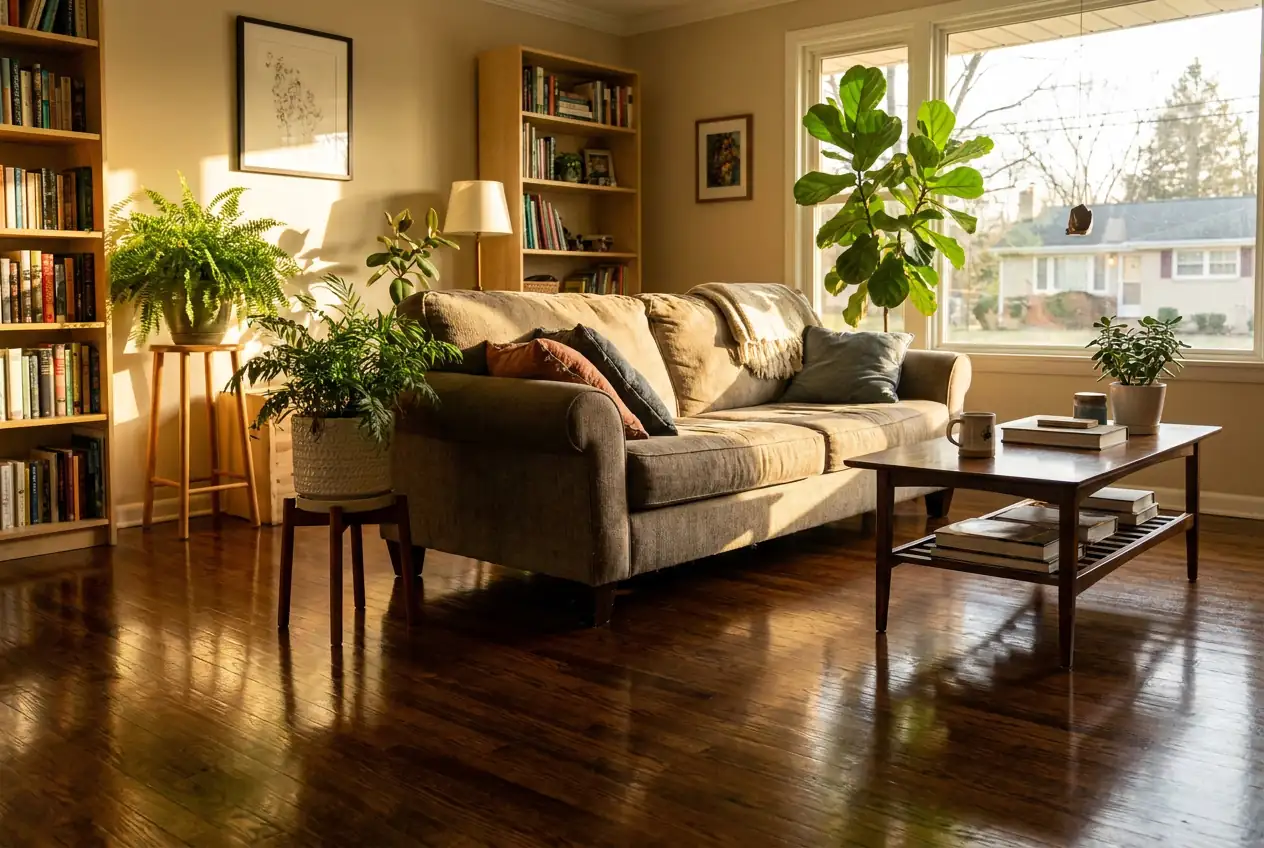
By evening the surface takes socks. By the next day it takes shoes, chairs and the dog. Felt pads go under the furniture feet as we set them back, the care sheet goes on the counter, and the only trace we leave is the part you wanted: a floor that looks like it remembers being new.

A refreshed hardwood floor catching the evening light with the furniture back in place

Asked before the furniture moves

Is it truly dust-free, or just less dusty?

The honest version: the pad produces fine particles and the sealed vacuum swallows them at the source, so what reaches the room is close to nothing. You will not find powder on the windowsills or in the vents. We still run a wipe cloth over nearby surfaces before leaving, and it comes up nearly clean.

Do we move out, or empty the rooms?

Neither. The crew shuffles furniture zone by zone and puts it all back on felt pads. You lose the use of the floor for the working day and walk it in socks that same evening. Beds stay made, cabinets stay full, life barely notices.

How soon can we walk, and when do the rugs return?

Socks the same evening, shoes and furniture the next day, area rugs after about a week. The coat keeps hardening under your feet for several days, which is why the rugs go last.

What if our floor is too far gone for sandless?

Then you hear it from us at the look, plainly. Gouges to bare wood, gray boards and deep cupping call for a full sanding, and a fresh coat over them would be a shine on borrowed time. About one floor in five we visit gets that answer, along with a fair description of what the bigger job involves.

Does it work on engineered wood and old floors?

Usually better than sanding does. Engineered boards carry a thin wear veneer that a drum sander eats through, while our pad only dresses the finish. Old solid floors that have been sanded many times before are the same story: no thickness lost, no risk of nailheads surfacing.

How long does the new shine last?

Three to five years in a busy household before the next refresh makes sense, longer in quiet rooms. The pleasant math is that a floor can be refreshed this way again and again, since no wood is removed, while each full sanding spends board thickness you never get back.

Streets we reach around Bottineau County

The map shows the lay of the land; the lists further down name every community a crew can reach from here with the pad still warm.

Shine by shine through Bottineau County

Farther out across North Dakota

One quiet day between this floor and the way it used to look.

Call (888) 217-5291